Chemical Mutagenesis
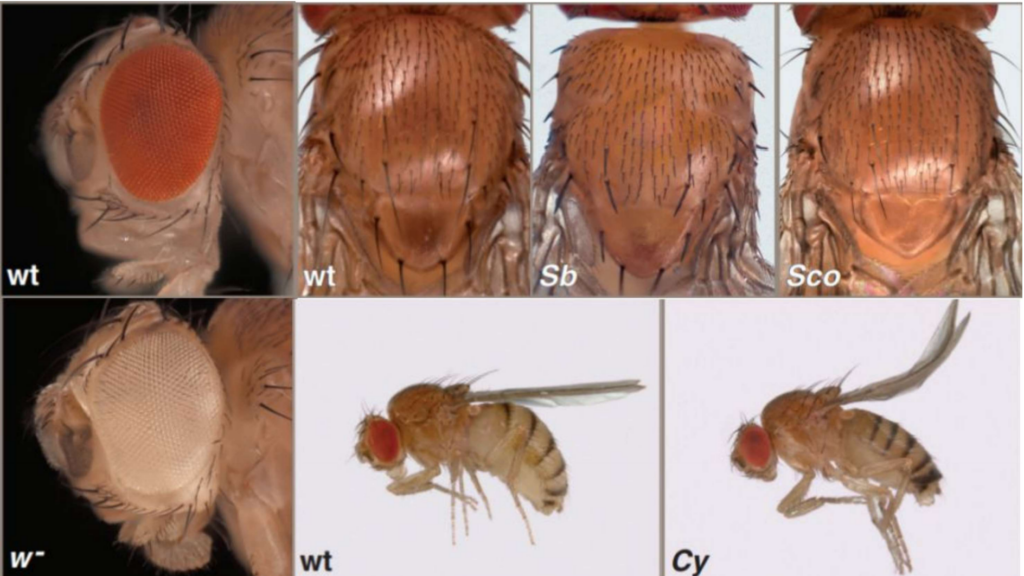
One of the oldest and most widely used methods involves exposing flies to chemical mutagens like ethyl methanesulfonate (EMS) or N-methyl-N-nitrosourea (MNU). These alkylating agents primarily induce point mutations by modifying DNA bases, leading to base-pair substitutions during replication. EMS, for instance, targets guanine residues, often resulting in G-to-A transitions. This method is efficient for genome-wide screens, as it generates random mutations without requiring prior gene knowledge. However, identifying the mutated gene can be labor-intensive, often needing mapping or sequencing. Chemical mutagenesis has been pivotal in forward genetic screens, uncovering genes involved in embryogenesis and behavior.
Radiation Mutagenesis
Ionizing radiation, such as X-rays or gamma rays, causes double-strand DNA breaks, leading to chromosomal rearrangements, deletions, inversions, or translocations. This approach is useful for generating large-scale structural mutations, which can disrupt multiple genes or create null alleles. Early Drosophila geneticists like Hermann Muller used X-rays to demonstrate mutation induction, earning a Nobel Prize in 1946. While effective for studying chromosomal biology, radiation mutagenesis is less precise than modern methods and can cause lethality or sterility in high doses.
Transposon-Mediated Mutagenesis
Transposon-mediated (or insertional) mutagenesis leverages mobile DNA elements, such as P-elements, to disrupt genes. P-elements are engineered vectors containing a transposase gene and marker (e.g., eye color gene like mini-white). When injected into embryos, the transposase excises the element from a plasmid and inserts it randomly into the genome, often into gene regulatory regions or exons, causing loss-of-function mutations. This method’s advantages include easy identification of insertion sites via inverse PCR or sequencing, and the ability to excise the transposon for reversion studies. Variants like piggyBac or Minos transposons offer different insertion preferences (e.g., near transcription start sites). Transposon libraries, such as the Berkeley Drosophila Genome Project’s collection of over 100,000 insertions, cover much of the genome, facilitating reverse genetics. It’s particularly valuable for creating tagged alleles for protein localization or enhancer traps.
Genome Editing with CRISPR/Cas9
A revolutionary targeted method, CRISPR/Cas9 uses guide RNAs to direct the Cas9 nuclease to specific DNA sequences, creating precise mutations like indels or knock-ins. Introduced in flies around 2013, it allows custom gene edits without random mutagenesis, surpassing traditional methods in specificity. However, it requires sequence knowledge and can have off-target effects.

Leave a Reply