The ENCODE (Encyclopedia of DNA Elements) project, launched in 2003 by the National Human Genome Research Institute (NHGRI), aims to comprehensively annotate functional elements in genomes, including transcription factor (TF) binding sites, enhancers, promoters, and other regulatory features. While primarily focused on the human genome, ENCODE extends to model organisms through the related modENCODE project (2007–2012) and its successor modERN (model organism Encyclopedia of Regulatory Networks), which target Drosophila melanogaster (fruit fly) and Caenorhabditis elegans (nematode worm). These efforts enable comparative genomics, biological validation of human findings, and insights into conserved regulatory mechanisms across species.
A core method for documenting TFs is chromatin immunoprecipitation followed by sequencing (ChIP-seq). ChIP-seq maps genome-wide protein-DNA interactions:
- Cells or tissues are crosslinked to preserve protein-DNA associations.
- Chromatin is fragmented (e.g., by sonication or enzymatic digestion).
- An antibody specific to the TF of interest (or a tagged version, like GFP in modERN) immunoprecipitates the protein-DNA complexes.
- Bound DNA is purified, sequenced, and mapped to the genome to identify enriched peaks—indicating TF binding sites.
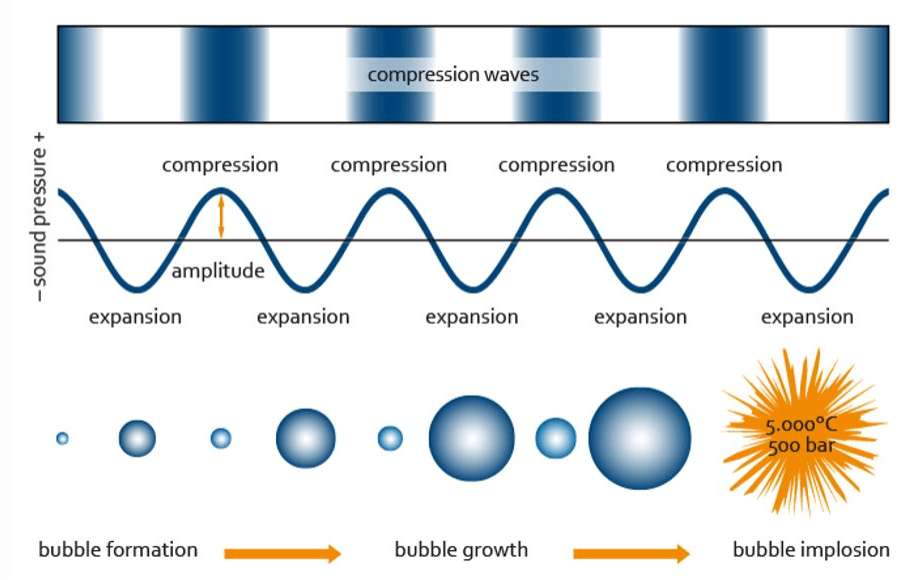
A sonicator creates alternating compression and expansion cycles, with rates depending on the frequency of the sound waves. During the low-pressure cycle, high-intensity ultrasonic waves create small vacuum bubbles. When the bubbles can no longer absorb energy, they collapse violently during a high-pressure cycle. This “cavitation” force results in DNA and chromatin being fragmented during sonication.
ENCODE/modENCODE consortia have generated thousands of ChIP-seq datasets: over 1,800 TF profiles in humans, plus extensive data in flies (e.g., 604 TFs identifying ~3.6 million sites across development) and worms (350 TFs identifying ~0.9 million sites). These reveal punctate (sharp) binding patterns for sequence-specific TFs, cluster into high-occupancy target (HOT) regions for broadly expressed genes, and highlight tissue-specific or developmental regulation. Standardized pipelines ensure quality, reproducibility, and comparability.
This multi-organism approach has illuminated conserved regulatory logic, combinatorial TF binding, and evolutionary conservation of cis-regulatory elements, making ENCODE/modENCODE/modERN invaluable resources for understanding gene regulation in development and disease.

Leave a Reply